HAPPY 100TH POST
To celebrate this momentous occasion, I am happy to introduce a new series of blog posts: Edible Beauty. I tried to think of a more creative title but alas I was unsuccessful. We all know eating healthy foods can help improve our bodies from the inside; but some of these same foods can also help improve our bodies from the outside...sometimes even better than the über expensive products. So why not give them a try?
To start off the series, I want to share the recipe for a facial scrub that can either be used daily or once in a while & it promises to leave the skin feeling great for hours to come.
About a week ago, my face broke out with a ton of tiny bumps. After browsing the web, I was pretty sure I had contact dermatitis (allergic reaction to something my face touched). I don't know for sure how I got it but I suspect it happened when I was trying on clothes a couple of days before. These bumps itched like crazy & the ones on my cheek even burned a bit. I didn't want to go to the doctor because I was already doing what she would tell me to do: take antihistamine & rub hydrocortisone cream on my face. What's worse, if I were to tell her that's what I was already doing, she might give me steroids. No, thank you!
I needed something that would relieve the itch/pain & I wanted it to be natural. So I went browsing through the web once more & many say a facial scrub can help unclog pores & relieve my symptoms. There are a ton of recipes for natural facial scrubs out there but settled on the one that had the properties that I was looking for & had all the ingredients in the house already!
What you will need to make this scrub...
2 tablespoons oat meal, crust into smaller pieces
1.5 teaspoons natural honey
0.25 teaspoon natural, unpasteurized apple cider vinegar
In a small bowl...
Mix everything together using your fingers until well incorporated
Add a water if the paste is too thick, it should be thick but not paste like
Spread the scrub all over the face using circular motion
Leave the scrub on for a couple of minutes & then rinse with plenty of tepid water
Pat the face dry & moisturize
For a daily scrub, ground up the oatmeal until it looks almost like a powder. I ground up a whole bunch & keeps it in a tupperware container & just take out the amount I need. For an occasional scrub, crush up the oatmeal a little bit with fingers or with a spoon. The bigger pieces are going to be rougher on the skin, giving it a more thorough scrub down.
So oatmeal, honey, & apple cider vinegar; what exactly do they do & how do they benefit the skin?
As foods...
Oatmeal is great for lowering high cholesterol & high blood pressure to improve cardiovascular health. The high amount of fiber is also good for regulating the digestive system. Honey is a great natural sweetener that can be used to substitute sugar & it has been shown to be able to lower cholesterol. Apple cider vinegar recently rose to superstardom for its multitude of benefits as a health food. When consumed with water, it can aid weight loss & help detoxify the body. When consumed by itself, it is a really good digestive aide. Long term consumption of apple cider vinegar can lower high cholesterol, lower high blood pressure, & some even say it can relieve seasonal allergy symptoms.
As skin care ingredients...
The texture of oatmeal makes it a great exfoliant. The saponin in oatmeal naturally cleanses pore while the protein & polysaccharides moisturize the skin. Additionally, the Avenanthramide in oatmeal helps reduce skin inflammation. Honey has natural antimicrobial properties which makes it great for fighting acne. There are plenty of antioxidants in honey (especially darker ones) which makes it great for anti-aging. Finally, the thick, sticky consistency of honey helps draw in and holds moisture in the skin. Apple cider vinegar, being an acid, is a natural astringent that can help reduce acne & skin redness. Also because it is an acid, apple cider vinegar can regulate the skin's pH (which is normally slightly acidic) to make it feel supple & look radiant.
I have been using the more gentle version of the scrub everyday for the last 5 days and my bumps are almost all gone. I don't think it is all because of the scrub but it did help with the itchiness & the burning sensation. Also, it didn't leave my skin feeling super dry & tight like it had felt when the bumps first appeared. I don't know if the scrub has done a good job in terms of exfoliating my skin - it feels soft but not like "baby's bottom" soft - but I will probably have an answer when I go see my esthetician next week.
For $8, I can buy all 3 of these ingredients enough to make this natural facial scrub for @ least a year. For the same amount of money, I can buy half a tube of the Body Shop facial scrub that I have been using & that would last about 4 months. You do the math.
Showing posts with label Nutrition. Show all posts
Friday, May 3, 2013
Saturday, January 26, 2013
Quick & Easy - Apple Breakfast Smoothie
Happy 2013! I wish everyone a fantastic year full of love, happiness, & - of course - delicious food!
I don't know when it became customary for me to make New Year's resolutions but it definitely didn't happen until a few years I moved to the US. When I was still in school, my resolutions were almost always about how I would be more studious. Then in the last 3 years, my resolutions shifted to how I would get healthier or how I would lose weight. This year, I am making a different resolution: to take better care of myself. This means physically, mentally, emotionally, nutritionally, & any other -ally that I can't think of right now.
To not only start off my year but also my day right, I am trying smoothies. Yes, I know I'm a good number of years late to this game but I didn't have the motivation or the tools to even attempt to make this a regular thing so I never bothered. Until now. I didn't want to do the usual strawberries & banana smoothie so I did a bit of browsing and came across this recipe created by celebrity trainer Harley Pasternak (Katy Perry, Megan Fox). This drink only takes a few ingredients, is quick to make, & it is super nutritious.
Throw in your blender...
1 apple
1 banana
0.5 cup low fat milk
0.75 cup plain Greek yogurt
5 raw almonds
1 teaspoon ground cinnamon
Give it a whirl...
Blend at high speed until the desired consistency (~30 seconds)
Makes 1 serving
After having a few of these, I wanted to know just exactly how this concoction is healthy. I did a little bit of digging & this is what I found: Apples are high in fiber, vitamin C, & they have phytonutrients that can help regulate blood sugar. Bananas are high in vitamin B6, potassium, & they are a great source of energy. Milk has plenty of protein & calcium & it is great for bone health. Greek yogurt has tons of protein & it helps boost digestive & immune system health. Almonds are high in manganese, vitamin E, healthy fat, & magnesium which increases blood flow as well as the distribution of oxygen & nutrients throughout the body. Cinnamon slows down stomach emptying, thereby sustaining the sensation of fullness & lessens the body's blood sugar spike. One additional perk about cinnamon is that its smell can increase a person's cognitive function.
This recipe comes in @ about 382 calories. It tastes a bit like an apple pie when I could ignore the taste of the banana coming through the background. Even though I used my super high-powered Ninja blender, there was still little bits of almond. This was good since it gave me something to chew & tricked my brain into thinking I was eating my breakfast instead of drinking it. Even though it doesn't look very large in the photo, this drink is filling & can keep me happy from 8am to lunch without the need for a snack. Here is to taking better care of myself & to making this into a part of daily life!
I don't know when it became customary for me to make New Year's resolutions but it definitely didn't happen until a few years I moved to the US. When I was still in school, my resolutions were almost always about how I would be more studious. Then in the last 3 years, my resolutions shifted to how I would get healthier or how I would lose weight. This year, I am making a different resolution: to take better care of myself. This means physically, mentally, emotionally, nutritionally, & any other -ally that I can't think of right now.
To not only start off my year but also my day right, I am trying smoothies. Yes, I know I'm a good number of years late to this game but I didn't have the motivation or the tools to even attempt to make this a regular thing so I never bothered. Until now. I didn't want to do the usual strawberries & banana smoothie so I did a bit of browsing and came across this recipe created by celebrity trainer Harley Pasternak (Katy Perry, Megan Fox). This drink only takes a few ingredients, is quick to make, & it is super nutritious.
Throw in your blender...
1 apple
1 banana
0.5 cup low fat milk
0.75 cup plain Greek yogurt
5 raw almonds
1 teaspoon ground cinnamon
Give it a whirl...
Blend at high speed until the desired consistency (~30 seconds)
Makes 1 serving
After having a few of these, I wanted to know just exactly how this concoction is healthy. I did a little bit of digging & this is what I found: Apples are high in fiber, vitamin C, & they have phytonutrients that can help regulate blood sugar. Bananas are high in vitamin B6, potassium, & they are a great source of energy. Milk has plenty of protein & calcium & it is great for bone health. Greek yogurt has tons of protein & it helps boost digestive & immune system health. Almonds are high in manganese, vitamin E, healthy fat, & magnesium which increases blood flow as well as the distribution of oxygen & nutrients throughout the body. Cinnamon slows down stomach emptying, thereby sustaining the sensation of fullness & lessens the body's blood sugar spike. One additional perk about cinnamon is that its smell can increase a person's cognitive function.
This recipe comes in @ about 382 calories. It tastes a bit like an apple pie when I could ignore the taste of the banana coming through the background. Even though I used my super high-powered Ninja blender, there was still little bits of almond. This was good since it gave me something to chew & tricked my brain into thinking I was eating my breakfast instead of drinking it. Even though it doesn't look very large in the photo, this drink is filling & can keep me happy from 8am to lunch without the need for a snack. Here is to taking better care of myself & to making this into a part of daily life!
Wednesday, August 8, 2012
Cracking the "Whip" on Heavy Cream
A friend & I were embarking on a little baking adventure when she asked me if I knew the difference between heavy cream & heavy whipping cream. Great question! Why do some recipes call for heavy cream & some for heavy whipping cream? Do they react differently? Do they taste different? What exactly is the difference between the 2?
To start off with the basics, cream is the yellow'ish fatty layer that lies on the surface of raw milk before homogenization [1]. There are 8 types of commonly used cream & they are classified by their butterfat content which then defines how well a cream can be whipped & how stable it is [2].
So what are heavy cream & heavy whipping cream? In the United States, both heavy cream & heavy whipping cream are creams with a butterfat content between 36%-40% [3]. The main difference is that heavy whipping cream contains small amounts of stabilizers & emulsifiers. Why?
Before the invention of heavy whipping cream, chefs (& probably home cooks too) would try to whip up plain heavy cream only to have it end up curdled because the cream & the utensils weren't cold enough. To make things easier for the consumers, manufacturers added in small quantities of Monoglyceride, Diglyceride, Polysorbate 80, & Carrageenan - thereby creating the "whipping" aspect - so the cream can be whipped up more quickly & at slightly lower temperatures [4]. This industrialization process not only made heavy cream easier to use, but the increased stability also meant giving the product a longer shelf life (also reduced production cost & greater profit margins for manufacturers; but that's a different blog post all together).
While we are @ it, let's clear 1 more thing up: what is whipping cream? Not heavy, not light, just whipping. Well, as you might have guessed it by now, it has something to do with the butterfat content. In the United States (I guess different countries have different standards), regular whipping cream is a cream that has a butterfat content of 30% [3].
So there, mystery solved: heavy whipping cream is simply heavy cream + chemicals. According to my research, almost all grocery stores nowadays sell only heavy whipping cream (even if it is not named as such); so for those of you out there who are trying to move away from processed foods, I strongly suggest skimming the ingredients lists before making a purchase or maybe even consider venturing to farmers' markets or diary farms to find natural heavy cream (just make sure it's not raw please!).

References:
[1] "Cream." Wikipedia. <http://en.wikipedia.org/wiki/Cream>.
[2] "Types of Cream - Definitions of Cream - What is Cream?" What's Cooking America
<http://whatscookingamerica.net/Sauces_Condiments/CreamDefinitions.htm>.
[3] "Cream." Joy of Baking. <http://www.joyofbaking.com/Cream.html>.
[4] "Heavy Cream Vs. Heavy Whipping Cream." 5 min: Life Videopedia.
< http://www.5min.com/Video/Heavy-Cream-Vs-Heavy-Whipping-Cream-517142420>.
To start off with the basics, cream is the yellow'ish fatty layer that lies on the surface of raw milk before homogenization [1]. There are 8 types of commonly used cream & they are classified by their butterfat content which then defines how well a cream can be whipped & how stable it is [2].
So what are heavy cream & heavy whipping cream? In the United States, both heavy cream & heavy whipping cream are creams with a butterfat content between 36%-40% [3]. The main difference is that heavy whipping cream contains small amounts of stabilizers & emulsifiers. Why?
Before the invention of heavy whipping cream, chefs (& probably home cooks too) would try to whip up plain heavy cream only to have it end up curdled because the cream & the utensils weren't cold enough. To make things easier for the consumers, manufacturers added in small quantities of Monoglyceride, Diglyceride, Polysorbate 80, & Carrageenan - thereby creating the "whipping" aspect - so the cream can be whipped up more quickly & at slightly lower temperatures [4]. This industrialization process not only made heavy cream easier to use, but the increased stability also meant giving the product a longer shelf life (also reduced production cost & greater profit margins for manufacturers; but that's a different blog post all together).
While we are @ it, let's clear 1 more thing up: what is whipping cream? Not heavy, not light, just whipping. Well, as you might have guessed it by now, it has something to do with the butterfat content. In the United States (I guess different countries have different standards), regular whipping cream is a cream that has a butterfat content of 30% [3].
So there, mystery solved: heavy whipping cream is simply heavy cream + chemicals. According to my research, almost all grocery stores nowadays sell only heavy whipping cream (even if it is not named as such); so for those of you out there who are trying to move away from processed foods, I strongly suggest skimming the ingredients lists before making a purchase or maybe even consider venturing to farmers' markets or diary farms to find natural heavy cream (just make sure it's not raw please!).
References:
[1] "Cream." Wikipedia. <http://en.wikipedia.org/wiki/Cream>.
[2] "Types of Cream - Definitions of Cream - What is Cream?" What's Cooking America
<http://whatscookingamerica.net/Sauces_Condiments/CreamDefinitions.htm>.
[3] "Cream." Joy of Baking. <http://www.joyofbaking.com/Cream.html>.
[4] "Heavy Cream Vs. Heavy Whipping Cream." 5 min: Life Videopedia.
< http://www.5min.com/Video/Heavy-Cream-Vs-Heavy-Whipping-Cream-517142420>.
Saturday, May 26, 2012
Gone Greek...Still
A few weeks back I wrote about my recent fascination with Greek yogurt. Although I tried a decent number of brands & determined a favorite, my fascination is still going strong as I found myself standing in front of the yogurt fridge @ the grocery store the other day searching for more blueberry Greek yogurt.
Specimen #7: Open Nature 100% Natural
6 ounces
140 calories. 0g fat. 23g carbohydrates. 22g sugar. 14g protein.
This is Safeway's organic brand & the yogurt is all natural & does not use milk containing rBST (an artificial growth hormone). The yogurt was semi-mixed together with the blueberries & it was thick but creamy. In terms of flavor, it was not tart & it was not blueberry'y @ all; it actually tasted kind of artificial. This was by far the sweetest of all the yogurts I've tried. It shows again that even if something is "natural" or "organic", it can still not be very good for you.
In short conclusion, Fage reigns!
Specimen #7: Open Nature 100% Natural
6 ounces
140 calories. 0g fat. 23g carbohydrates. 22g sugar. 14g protein.
This is Safeway's organic brand & the yogurt is all natural & does not use milk containing rBST (an artificial growth hormone). The yogurt was semi-mixed together with the blueberries & it was thick but creamy. In terms of flavor, it was not tart & it was not blueberry'y @ all; it actually tasted kind of artificial. This was by far the sweetest of all the yogurts I've tried. It shows again that even if something is "natural" or "organic", it can still not be very good for you.
In short conclusion, Fage reigns!
Saturday, May 5, 2012
Gone Greek
In recent years, it seems that countless numbers of diets, cleanses, health food trends, etc. have been popularized, phased out, & popularized again. But one health food trend that emerged 2-3 years ago - the Greek yogurt - seems to be sticking around; at least for the next little while anyway. First popularized as a snack, the Greek yogurt's utility has expanded & it is now a widely promoted substitute for mayonnaise, sour cream, & creme fraiche.
Just exactly what is Greek yogurt? From my research (a.k.a. Wikipedia), Greek yogurt is a type of yogurt called strained yogurt. Strained yogurt is exactly what its name says; it is yogurt that has been strained through a cloth or filter in order to remove the whey & excess water. By doing so, the end product is thicker & has a more substantial texture. So Greek yogurt = dried regular yogurt, what's so special about that? According to LiveStrong, Greek yogurt is superior to regular yogurt in 6 ways:
- Greek yogurt can have 2x as much protein as regular yogurt.
- Greek yogurt can have up to 50% less sodium than regular yogurt.
- Greek yogurt has about 44% less carbohydrates than regular yogurt.
- Greek yogurt contains less lactose which makes it easier to digest.
- Greek yogurt has more utility in cooking than regular yogurt.
- The rich texture of Greek yogurt leaves eaters feeling more satisfied.
Recently, I have hopped onto the Greek yogurt train because I really do enjoy its tangy flavor & rich full'bodied texture. But I have realized that there are quite a number of brands of Greek yogurt out there. In order to make sure that I pick the best one for the long run, I conducted a taste test using all blueberry flavors & here are my evaluations:
Specimen #1: Yoplait Greek
4 ounces
110 calories. 0g fat. 18g carbohydrates. 13g sugar. 8g protein.
Purchased as a 4 pack, each container has plain Greek yogurt with a blueberry "sauce" on the bottom. While the "sauce" is made of real blueberries, it was not blueberry'y @ all. The yogurt had a fairly thick consistency & it was tart; however,the tangy'ness was short lived.
Specimen #2: Fage Total 0%
5.3 ounces
120 calories. 0g fat. 18g carbohydrates. 16g sugar. 13g protein.
This was a blueberry & acai flavor & it was a container of plain yogurt with a separate container of "sauce." I thought the design of the container was very clever since I could add as much or as little of the "sauce" as I wanted. The yogurt was very thick & it was tart even after I added in the fruit.
Specimen #3: Trader Joe's Nonfat Greek Yogurt
5.3 ounces
120 calories. 0g fat. 16g carbohydrates. 14g sugar. 13g protein.
This yogurt came already mixed together & it smelled really sweet. The texture was thick but it was a bit gritty & it was not as tart as Fage.
Specimen #4: Chobani 0%
6 ounces
140 calories. 0g fat. 20g carbohydrates. 20g sugar. 14g protein.
The yogurt was mostly mixed together but there was extra blueberry @ the bottom. It was too sweet & not very tangy. It was also very smooth like regular yogurt.
Specimen #5: Oikos Organic
5.3 ounces
120 calories. 0g fat. 16g carbohydrates. 15g sugar. 13g protein.
This was another one that had the fruit "sauce" at the bottom. While it was not very sweet, it didn't taste like blueberries. The yogurt was think & it was very much like regular yogurt.
Specimen #6: Lucerne Greek Nonfat Yogurt
6.0 ounces
140 calories. 0g fat. 24g carbohydrates. 22g sugar. 11g protein.
The yogurt itself was sweet, runny, & did not taste anything like blueberry. In terms of nutrition, it has disproportionately more calories, more carbohydrates, more sugar, & less protein; this is everything you don't want in a Greek yogurt.
As you can probably see, the nutritional content across different brands is pretty similar; except for the sugar so that's definitely something to look out for. In terms of flavor and texture, the Fage was definitely my favorite, albeit it was the most expensive one. I will be continuing my search in order to increase my sample size, but in the mean time I am going to grab a Fage out of my fridge & have a little mid-afternoon snack.
Specimen #1: Yoplait Greek
4 ounces
110 calories. 0g fat. 18g carbohydrates. 13g sugar. 8g protein.
Purchased as a 4 pack, each container has plain Greek yogurt with a blueberry "sauce" on the bottom. While the "sauce" is made of real blueberries, it was not blueberry'y @ all. The yogurt had a fairly thick consistency & it was tart; however,the tangy'ness was short lived.
Specimen #2: Fage Total 0%
5.3 ounces
120 calories. 0g fat. 18g carbohydrates. 16g sugar. 13g protein.
This was a blueberry & acai flavor & it was a container of plain yogurt with a separate container of "sauce." I thought the design of the container was very clever since I could add as much or as little of the "sauce" as I wanted. The yogurt was very thick & it was tart even after I added in the fruit.
Specimen #3: Trader Joe's Nonfat Greek Yogurt
5.3 ounces
120 calories. 0g fat. 16g carbohydrates. 14g sugar. 13g protein.
This yogurt came already mixed together & it smelled really sweet. The texture was thick but it was a bit gritty & it was not as tart as Fage.
Specimen #4: Chobani 0%
6 ounces
140 calories. 0g fat. 20g carbohydrates. 20g sugar. 14g protein.
The yogurt was mostly mixed together but there was extra blueberry @ the bottom. It was too sweet & not very tangy. It was also very smooth like regular yogurt.
Specimen #5: Oikos Organic
5.3 ounces
120 calories. 0g fat. 16g carbohydrates. 15g sugar. 13g protein.
This was another one that had the fruit "sauce" at the bottom. While it was not very sweet, it didn't taste like blueberries. The yogurt was think & it was very much like regular yogurt.
Specimen #6: Lucerne Greek Nonfat Yogurt
6.0 ounces
140 calories. 0g fat. 24g carbohydrates. 22g sugar. 11g protein.
The yogurt itself was sweet, runny, & did not taste anything like blueberry. In terms of nutrition, it has disproportionately more calories, more carbohydrates, more sugar, & less protein; this is everything you don't want in a Greek yogurt.
As you can probably see, the nutritional content across different brands is pretty similar; except for the sugar so that's definitely something to look out for. In terms of flavor and texture, the Fage was definitely my favorite, albeit it was the most expensive one. I will be continuing my search in order to increase my sample size, but in the mean time I am going to grab a Fage out of my fridge & have a little mid-afternoon snack.
Thursday, April 5, 2012
Getting Canned...Again
Earlier this year, I wrote a post on the Boy's behalf about his taste test of canned coffees. After trying 3 different brands, he had to stop his experiment because (1) they were all really gross tasting & (2) the high amount of sugar within each of these drinks could seriously cause Diabetes.
On a recent trip to the East Village, we discovered a cozy little Asian market where the Boy's eyes once again fell upon a can of coffee. I don't know if he's just stubborn of if he just didn't learn his lesson the last time, but here we go again...
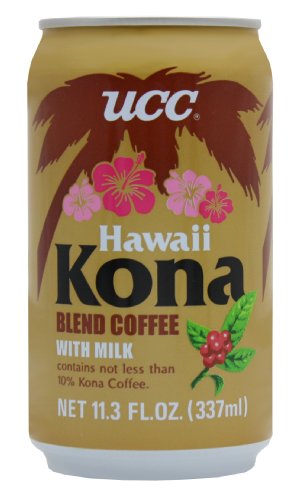
Specimen #4: UCC Hawaii Kona Blend with Milk
At the price of $1.49 & 15.6g of sugar per 8oz, this specimen was...that's right...too sweet! But @ least it was tolerable enough that he drank the whole can. Unfortunately, like all 3 of the original specimens, the texture of the drink was no match to one that is freshly brewed.
Although this attempt was the best of all the attempts, the verdict still stands that coffee in a can is a no-can-do.
On a recent trip to the East Village, we discovered a cozy little Asian market where the Boy's eyes once again fell upon a can of coffee. I don't know if he's just stubborn of if he just didn't learn his lesson the last time, but here we go again...
Specimen #4: UCC Hawaii Kona Blend with Milk
At the price of $1.49 & 15.6g of sugar per 8oz, this specimen was...that's right...too sweet! But @ least it was tolerable enough that he drank the whole can. Unfortunately, like all 3 of the original specimens, the texture of the drink was no match to one that is freshly brewed.
Although this attempt was the best of all the attempts, the verdict still stands that coffee in a can is a no-can-do.
Saturday, March 10, 2012
Weekend Dinner - Super Healthy Veggie Chili
Being on a meatless diet means I eat twice as much as I usually do; but at least it's vegetables that I am putting into my system. Still...I don't like looking @ a great big bowl of food & the feeling of eating that much quantity'wise. So I came up with the idea to make something hearty so I can feel full without eating like a beach whale.
I found this recipe on Healthy Endeavors & I made some adjustments according to my taste. Even though the overall cook time was a bit long, the prep was pretty painless & it was mostly just watching over the pot to make sure bad things weren't happening.
The list of ingredients is not too long...
2 zucchini. Something non'traditional to make the chili more filling.
2 red bell peppers. You can use any color but I like red.
1 medium yellow onion. I think 1/2 is enough because the whole one was a bit much.
2 Beefsteak tomatoes. Get a few more if you're going to use a Roma.
1 lemon for its juice.
1 teaspoon of garlic paste. No real garlic because they will just sprout in my fridge.
1 can of diced tomatoes.
1 can of kidney beans.
1 can of garbanzo beans.
1 can of corn kernel.
1 package of Chili mix. I got lazy & didn't buying all of the individual spices.
1 teaspoon of chipotle powder.
1 tablespoon of Sriracha. To give this chili a real kick.
And the steps are quite simple...
Dice the zucchini, bell peppers, onion, & tomatoes. I cut them kinda big so they wouldn't get cooked down to little itty bitty bits of nothing.
Heat up some oil in a large pot over medium heat. Add in the garlic paste & after the garlic starts to smell a little, add in the onion, the zucchini, & the bell peppers. Sautee them for about 7 minutes until the onion turns translucent.
Reduce the heat to low & add in the tomatoes & the can of diced tomatoes - along with the juice & half a can's worth of water. Stir everything around & then toss in the package of chili mix. Stir again to make sure that it's all dissolved into the liquid.
Cook this over medium-low heat for 30 minutes.
During this time, drain & rinse your beans & corn kernels.
Once the time is up, add in the beans, the corn, & juice of the entire lemon. Season with the chipotle powder, the Sriracha, & some salt/pepper.
Mix everything together & let this cook over medium-low heat for 15 more minutes.
And you're done! You can eat this alone or you can have it with a bit of rice. You can even scoop it up with some bread. A spicy, delicious, & super filling way of eating healthy yet creative.
I found this recipe on Healthy Endeavors & I made some adjustments according to my taste. Even though the overall cook time was a bit long, the prep was pretty painless & it was mostly just watching over the pot to make sure bad things weren't happening.
The list of ingredients is not too long...
2 zucchini. Something non'traditional to make the chili more filling.
2 red bell peppers. You can use any color but I like red.
1 medium yellow onion. I think 1/2 is enough because the whole one was a bit much.
2 Beefsteak tomatoes. Get a few more if you're going to use a Roma.
1 lemon for its juice.
1 teaspoon of garlic paste. No real garlic because they will just sprout in my fridge.
1 can of diced tomatoes.
1 can of kidney beans.
1 can of garbanzo beans.
1 can of corn kernel.
1 package of Chili mix. I got lazy & didn't buying all of the individual spices.
1 teaspoon of chipotle powder.
1 tablespoon of Sriracha. To give this chili a real kick.
And the steps are quite simple...
Dice the zucchini, bell peppers, onion, & tomatoes. I cut them kinda big so they wouldn't get cooked down to little itty bitty bits of nothing.
Heat up some oil in a large pot over medium heat. Add in the garlic paste & after the garlic starts to smell a little, add in the onion, the zucchini, & the bell peppers. Sautee them for about 7 minutes until the onion turns translucent.
Reduce the heat to low & add in the tomatoes & the can of diced tomatoes - along with the juice & half a can's worth of water. Stir everything around & then toss in the package of chili mix. Stir again to make sure that it's all dissolved into the liquid.
Cook this over medium-low heat for 30 minutes.
During this time, drain & rinse your beans & corn kernels.
Once the time is up, add in the beans, the corn, & juice of the entire lemon. Season with the chipotle powder, the Sriracha, & some salt/pepper.
Mix everything together & let this cook over medium-low heat for 15 more minutes.
And you're done! You can eat this alone or you can have it with a bit of rice. You can even scoop it up with some bread. A spicy, delicious, & super filling way of eating healthy yet creative.
Saturday, January 7, 2012
Getting Canned
Coffee is an essential part of many people's daily routine. But let's be honest - how many people actually have the time or the energy to fire up their espresso machines, their French presses, or even just their regular-ol' drip machines every single time they want an extra jolt of energy??
Surfacing in 1969 in Japan, canned coffee has become a popular & convenient alternative for the multiple-times-a-day coffee drinker; & sometimes even for the non-regular coffee drinkers. Its existence has spanned worldwide & has even been made into energy drinks. But do canned coffees really deliver on the same levels as real coffee? Being ever so curious & adventurous, the Boy decided to pick up 3 different types of canned (or bottled) coffee & did a taste test. Here are the results according to him...
Specimen #1: UCC Original Coffee with Milk
The first to introduce canned coffee to the world, the UCC Original Coffee with Milk smelled bland. The taste was overly sweet to the point where it tasted artificial & more like condensed milk than anything. The Boy actually said that the after taste of the coffee made him thirsty...but not for more. A can costs about $1.28 and it contains 17.7g sugar per 8oz.
Specimen #2: Sangaria Milk Coffee
Priced @ $2.13 a bottle, this coffee was really, really, really sweet. It's so sweet that it can be classified as milk with a little bit of coffee flavoring. After only 1 sip, the Boy called it quits. Even though this was much sweeter than the UCC, it only has 16g super per 8oz.
Specimen #3: Pokka Milk Coffee, Real Brewed
Credited as the company that put the canned coffee industry on the maps, this can of coffee was also really, really artificially sweet. While it does have more coffee taste than the Sangaria, its after taste was cloying on the tongue. This was the cheapest of all 3 brands - only $0.93 - but it had the highest sugar content of 17.8g per 8oz.
While the wanted to try as many brands of canned coffee as he could get his hands on, the Boy decided to discontinue his experiment in order to prevent premature Diabetes. So the final verdict is UCC > Pokka > Sangaria; but none of the specimens could truly be considered as coffee. While almost all Japanese drinks companies & many European/US companies (i.e. Starbucks, Illy) offer canned versions of our favorites coffee beverages, nothing can really compare to the real deal. So next time, when you're looking for a quick caffeine fix - or when you just need that taste of coffee in your mouth - but you absolutely don't want to break out the big guns, can the canned stuff & go for something like a Starbucks Via or just shell out a couple of dollar and go to a cafe.
Surfacing in 1969 in Japan, canned coffee has become a popular & convenient alternative for the multiple-times-a-day coffee drinker; & sometimes even for the non-regular coffee drinkers. Its existence has spanned worldwide & has even been made into energy drinks. But do canned coffees really deliver on the same levels as real coffee? Being ever so curious & adventurous, the Boy decided to pick up 3 different types of canned (or bottled) coffee & did a taste test. Here are the results according to him...
Specimen #1: UCC Original Coffee with Milk
The first to introduce canned coffee to the world, the UCC Original Coffee with Milk smelled bland. The taste was overly sweet to the point where it tasted artificial & more like condensed milk than anything. The Boy actually said that the after taste of the coffee made him thirsty...but not for more. A can costs about $1.28 and it contains 17.7g sugar per 8oz.
Specimen #2: Sangaria Milk Coffee
Priced @ $2.13 a bottle, this coffee was really, really, really sweet. It's so sweet that it can be classified as milk with a little bit of coffee flavoring. After only 1 sip, the Boy called it quits. Even though this was much sweeter than the UCC, it only has 16g super per 8oz.
Specimen #3: Pokka Milk Coffee, Real Brewed
Credited as the company that put the canned coffee industry on the maps, this can of coffee was also really, really artificially sweet. While it does have more coffee taste than the Sangaria, its after taste was cloying on the tongue. This was the cheapest of all 3 brands - only $0.93 - but it had the highest sugar content of 17.8g per 8oz.
While the wanted to try as many brands of canned coffee as he could get his hands on, the Boy decided to discontinue his experiment in order to prevent premature Diabetes. So the final verdict is UCC > Pokka > Sangaria; but none of the specimens could truly be considered as coffee. While almost all Japanese drinks companies & many European/US companies (i.e. Starbucks, Illy) offer canned versions of our favorites coffee beverages, nothing can really compare to the real deal. So next time, when you're looking for a quick caffeine fix - or when you just need that taste of coffee in your mouth - but you absolutely don't want to break out the big guns, can the canned stuff & go for something like a Starbucks Via or just shell out a couple of dollar and go to a cafe.
Thursday, January 5, 2012
Nothing Homemade - Double'y Clam'y Linguine
Ever had a day where nothing goes as planned? It's 4pm & you just got off work. Your plans for dinner fell through & so you had to get groceries, get home (which takes ~1.5 hours), & put dinner for 2 on the table in less than 30 minutes.
That was my Monday.
Yeah - pizza delivery was definitely an option but it would've taken $15.00 out of my wallet & put in 620 Calories - along with 26g of fat, 1600mg of sodium, & 76g of carbohydrates - into my body*. No thank you! Instead, I bought $7.28 of food & made a delicious dinner in 10 minutes.
All it took was 1 package of Trader Joe's Linguine with Clam Sauce, 1 box of Trader Joe's Steamer Clams in Garlic Butter Sauce, & 3 tablespoons of water...
Start cooking the steamer clams according to the instructions on the box. Add in the linguine after 1 minute & cook that according to the instructions on the package. In 10 minutes or less (I timed!) you are going to end up with 2 servings of delicious food that looks like this...
You might think this plate of yummy'ness is going to be disastrous in terms of its nutrition. As it turns out, 1 plate contains 310 Calories, 11g Fat, 670mg Sodium, 33g Carbohydrates, 90mg Cholesterol, 21g Protein, & 2g Dietary fiber.
There you have it! At half the price of a pizza, you can consume half the Calories & other bad stuff from , & be able to enjoy twice the goodness.
* Nutritional contents were calculated for the consumption of 2 slices of Papa John's pepperoni pizza.
That was my Monday.
Yeah - pizza delivery was definitely an option but it would've taken $15.00 out of my wallet & put in 620 Calories - along with 26g of fat, 1600mg of sodium, & 76g of carbohydrates - into my body*. No thank you! Instead, I bought $7.28 of food & made a delicious dinner in 10 minutes.
All it took was 1 package of Trader Joe's Linguine with Clam Sauce, 1 box of Trader Joe's Steamer Clams in Garlic Butter Sauce, & 3 tablespoons of water...
Start cooking the steamer clams according to the instructions on the box. Add in the linguine after 1 minute & cook that according to the instructions on the package. In 10 minutes or less (I timed!) you are going to end up with 2 servings of delicious food that looks like this...
You might think this plate of yummy'ness is going to be disastrous in terms of its nutrition. As it turns out, 1 plate contains 310 Calories, 11g Fat, 670mg Sodium, 33g Carbohydrates, 90mg Cholesterol, 21g Protein, & 2g Dietary fiber.
There you have it! At half the price of a pizza, you can consume half the Calories & other bad stuff from , & be able to enjoy twice the goodness.
* Nutritional contents were calculated for the consumption of 2 slices of Papa John's pepperoni pizza.
Friday, December 2, 2011
Weekend Dinner - Squash Beans & Kale "Minestrone"
My partner's mother got me a butternut squash a couple of weeks ago & I finally have time to cook it. Coincidentally I had read about a recipe in Self magazine that I wanted to try out that uses butternut squash. Perfect! I ended up deviating quite a bit from the original recipe because I didn't have all the ingredients. But the end product was still delicious.
Here are the ingredients I used...
1 quart of chicken broth
2 cups of water
1 can of diced tomatoes with the juice (I was feeling lazy)
1 can of cannellini beans (the original recipe calls for kidney beans)
5 cups of butternut squash, cubed
7 oz of kale, chopped (I used a 10oz bag of chopped kale from Trader Joe's for $1.99)
Salt & black pepper to taste (I also added some chipotle powder for kick)
And this is how it went...
In a small pot, boil some water & blanch the cannellini beans for a couple of minutes. I did this to get rid of the gooey gunk that canned beans usually sit in.
In a large soup pot, bring to a boil the chicken broth, water, & tomato.
While waiting for the soup base to boil & for the beans to blanch, peel & cube up the butternut squash. This was 1 of the hardest things I have had to do in cooking. I did find out though, that my ceramic knife is far superior to my metal one. I used the entire squash which came out to about 5 cups even though the recipe asks for only 3.
Once the soup base is boiling, add in all of the butternut squash cube. Season with a little bit of soil & let it all boil for 15 minutes.
After the 15 minutes, add in the kale (making sure to submerge it into the soup) & the beans. Once the soup comes back up to a boil, season with black pepper & a tiny bit of chipotle powder.
There you go! A delicious, healthy, warming meal...all in 1 bowl. Oh, & did I mention it's anti-cancer too??
Sunday, November 6, 2011
Sweet As Sugar
This past Monday was Halloween & seeing kids going trick-or-treat'ing made me think of sugar. I personally am not anti'sugar, I use it when I cook or bake; but when it comes to sweetening a drink - i.e. coffee - I instinctively pick up a pack of Splenda® instead.
I never knew much about artificial sweeteners except that my grandmother used it because of her diabetes. I also knew that blue packets (Equal®) are better than pink packets (Sweet 'n Low®). According to my research (mostly Wikipedia), the first artificial sweetener was discovered by accident & it became popular with manufacturers because it was cheaper than actual sugar. To verify this claim, I went onto Amazon and looked up the prices of white sugar as well as 4 popular sugar substitutes. Here is the verdict -
Even though these calculations are not absolute; the differences in price is pretty clear. If the prices of artificial sweeteners can be up to 10x more than that of sugar, then why are they so popular? As a frequent user of artificial sweeteners, I wanted to know more about their pros & cons. I did more research (mostly Wikipedia again) & did these following comparisons -
Aspartame (Equal®)
First discovered in the early 1980s, aspartame is the common sweetener used in diet
soft drinks. It is 200x sweeter than sugar and it is made mainly of 2 amino acids.
Unfortunately, aspartame breaks down @ high temperatures so it can't be used for
cooking/baking. Health wise, aspartame has been involved in many controversies
in the past (i.e. aspartame metabolites were thought to be toxic/carcinogenic); but all
of the claims have been rebutted by the FDA.
Neotame
Used mostly in fruit/vegetable juices, neotame is 7,000x to 13,000x sweeter than
sugar. It is similar in properties to aspartame but more stable. Other than having a
bitter after taste, neotame is 1 of the only artificial sweeteners that is ranked as "safe"
by the Center for Science in the Public Interest
Saccharin (Sweet 'n Low®)
Discovered in 1957, saccharin was the first table top artificial sweetener & it is 300x
sweeter than sugar. In addition to having a bitter & metallic after taste, this sugar
substitute was linked to bladder cancer in rodents in the 1970s. However, all health
warnings have been removed since 2000.
Sucrolose (Splenda®)
Even though it was discovered in 1976, sucrolose wasn't really made popular until
recently. Unlike earlier sweeteners, sucrolose is made from sugar & has no artificial
flavor. Additionally, sucrolose can be heated up to 450 degrees which makes it
appropriate for cooking/baking. The 2 main negative attributes are that (1) it does not
produce browning/caramelization like sugar & (2) it has potential negative
environmental impacts.
Stevia (Truvia™)
Using only the leaf of the stevia plant, this natural sweeter that is 300x sweeter than
sugar. Like sucrolose, stevia can also be used for cooking/baking. Although Truvia™
and other stevia products have been popularized since 2008, not all stevia products
have been approved by the FDA.
After doing my research, it doesn't seem like artificial sweeteners are horrible for people's health. So go ahead & sweeten it up!
I never knew much about artificial sweeteners except that my grandmother used it because of her diabetes. I also knew that blue packets (Equal®) are better than pink packets (Sweet 'n Low®). According to my research (mostly Wikipedia), the first artificial sweetener was discovered by accident & it became popular with manufacturers because it was cheaper than actual sugar. To verify this claim, I went onto Amazon and looked up the prices of white sugar as well as 4 popular sugar substitutes. Here is the verdict -
- C&H® Pure Cane Sugar - $0.08 per oz
- Equal® Zero Calorie Sweetener - $0.33 per oz
- Sweet 'n Low® Zero Calorie Sweetener - $0.27 per oz
- Splenda® No Calorie Sweetener - $0.79 per oz
- Truvia™, Nature's Calorie-Free Sweetener - $0.07 per oz
Even though these calculations are not absolute; the differences in price is pretty clear. If the prices of artificial sweeteners can be up to 10x more than that of sugar, then why are they so popular? As a frequent user of artificial sweeteners, I wanted to know more about their pros & cons. I did more research (mostly Wikipedia again) & did these following comparisons -
Aspartame (Equal®)
First discovered in the early 1980s, aspartame is the common sweetener used in diet
soft drinks. It is 200x sweeter than sugar and it is made mainly of 2 amino acids.
Unfortunately, aspartame breaks down @ high temperatures so it can't be used for
cooking/baking. Health wise, aspartame has been involved in many controversies
in the past (i.e. aspartame metabolites were thought to be toxic/carcinogenic); but all
of the claims have been rebutted by the FDA.
Neotame
Used mostly in fruit/vegetable juices, neotame is 7,000x to 13,000x sweeter than
sugar. It is similar in properties to aspartame but more stable. Other than having a
bitter after taste, neotame is 1 of the only artificial sweeteners that is ranked as "safe"
by the Center for Science in the Public Interest
Saccharin (Sweet 'n Low®)
Discovered in 1957, saccharin was the first table top artificial sweetener & it is 300x
sweeter than sugar. In addition to having a bitter & metallic after taste, this sugar
substitute was linked to bladder cancer in rodents in the 1970s. However, all health
warnings have been removed since 2000.
Sucrolose (Splenda®)
Even though it was discovered in 1976, sucrolose wasn't really made popular until
recently. Unlike earlier sweeteners, sucrolose is made from sugar & has no artificial
flavor. Additionally, sucrolose can be heated up to 450 degrees which makes it
appropriate for cooking/baking. The 2 main negative attributes are that (1) it does not
produce browning/caramelization like sugar & (2) it has potential negative
environmental impacts.
Stevia (Truvia™)
Using only the leaf of the stevia plant, this natural sweeter that is 300x sweeter than
sugar. Like sucrolose, stevia can also be used for cooking/baking. Although Truvia™
and other stevia products have been popularized since 2008, not all stevia products
have been approved by the FDA.
After doing my research, it doesn't seem like artificial sweeteners are horrible for people's health. So go ahead & sweeten it up!
Saturday, October 29, 2011
De'Caf Or Not De'Caf
That is the question.
For those of you who know me, you know I love my coffee. To say I am coffee dependent would be an understatement.
I recently read in The Man Who Ate Everything about a French diet which bans caffeine. As much as I love my sugar'free vanilla Americano, I couldn't help but wonder - is caffeine contraindicated for weight management? Why? How? I did some research - nothing serious - and come up with the following:
Caffeine & Weight Management: The Good
Diuretic.
Diuretics increase people's rate of urination. When you urinate more, you lose
more water. Therefore caffeine can lead to (temporary) reductions in weight.
Appetite suppressant.
Effects are minor & brief. The exact mechanism is not clear.
Increases metabolism.
Caffeine increases thermogenesis - heat creation - increasing the number of
of calories burnt.
Caffeine & Weight Management: The Bad
Stimulates production of adrenaline.
Adrenaline increases your blood glucose level; therefore increasing production
of insulin. The insulin will eventually absorb sugars & fatty acids in the blood
into cells. The more sugar & fat stored in your body, the more you weigh.
So this basically shows that caffeine does good things & it does bad things. Great. But what does that mean for people who drink coffee but are trying to manage their weight? Should we keep drinking coffee like usual? Should we cut back? Should we go completely decaf? At this time I don't think there is a definitive answer to these questions; I am not sure if there ever will be a single answer.
Other than weight management, caffeine has also been show to have an impact on other aspects of health. Most recently, a study conducted by Brigham and Women's Hospital & Harvard Medical School showed that women who consumed 3+ cups of coffee per day had 20% lower risk of developing basal cell carcinoma - the most common form of skin cancer. Men who consumed 3+ cups of coffee per day benefited from a 9% reduction in risk.
Personally I believe in the cliche "everything in moderation". Until there is strong evidence proving the beneficial/detrimental effects of caffeine on health, I am going to keep my morning cup. But just to be cautious, I think I will only have my afternoon cup only a couple times a week.
A final note, regardless of what type of coffee you like to drink, too much fat & sugar are definitely bad for you. So whenever you can, try to stay away from the TripleGrandeCaramelMchaccinoWithWhip.
For those of you who know me, you know I love my coffee. To say I am coffee dependent would be an understatement.
I recently read in The Man Who Ate Everything about a French diet which bans caffeine. As much as I love my sugar'free vanilla Americano, I couldn't help but wonder - is caffeine contraindicated for weight management? Why? How? I did some research - nothing serious - and come up with the following:
Caffeine & Weight Management: The Good
Diuretic.
Diuretics increase people's rate of urination. When you urinate more, you lose
more water. Therefore caffeine can lead to (temporary) reductions in weight.
Appetite suppressant.
Effects are minor & brief. The exact mechanism is not clear.
Increases metabolism.
Caffeine increases thermogenesis - heat creation - increasing the number of
of calories burnt.
Caffeine & Weight Management: The Bad
Stimulates production of adrenaline.
Adrenaline increases your blood glucose level; therefore increasing production
of insulin. The insulin will eventually absorb sugars & fatty acids in the blood
into cells. The more sugar & fat stored in your body, the more you weigh.
So this basically shows that caffeine does good things & it does bad things. Great. But what does that mean for people who drink coffee but are trying to manage their weight? Should we keep drinking coffee like usual? Should we cut back? Should we go completely decaf? At this time I don't think there is a definitive answer to these questions; I am not sure if there ever will be a single answer.
Other than weight management, caffeine has also been show to have an impact on other aspects of health. Most recently, a study conducted by Brigham and Women's Hospital & Harvard Medical School showed that women who consumed 3+ cups of coffee per day had 20% lower risk of developing basal cell carcinoma - the most common form of skin cancer. Men who consumed 3+ cups of coffee per day benefited from a 9% reduction in risk.
Personally I believe in the cliche "everything in moderation". Until there is strong evidence proving the beneficial/detrimental effects of caffeine on health, I am going to keep my morning cup. But just to be cautious, I think I will only have my afternoon cup only a couple times a week.
A final note, regardless of what type of coffee you like to drink, too much fat & sugar are definitely bad for you. So whenever you can, try to stay away from the TripleGrandeCaramelMchaccinoWithWhip.
Subscribe to:
Posts (Atom)