What is Christmas without a little disaster??
When my mom found out on Christmas morning that our neighborhood grocery store wasn't opened for business - even though it said it would be - she quickly came up with a plan to make a homemade fruit salad using only 5 ingredients.
The name "Whole Bunch'a Crap" came about when my cousin's boyfriend asked me what was in the salad & I didn't feel like explaining so I said "there are apples, cucumbers, and...uh...a whole bunch'a crap." Nothing clever, I know.
This delicious concoction was made using these 5 things...
Apples - We used 2 fuji apples & 2 granny smith apples to get the red/green as well as a little bit of tang.
Cucumbers - We used the baby kind since cucumbers are not in season anymore (I think).
Dried fruits - We have a big bag of mixed dried fruits @ home so we tossed in all some raisins, dried peaches, & dried pineapples.
Nuts - The nuts we used came in the same bag as the mixed dried fruits but if you want to need to get nuts in addition to the fruits, we used peanuts, almonds, and toasted walnuts.
Mayonnaise - We would've preferred another dressing (i.e. poppy seed) but the stores were closed & all the Chinese supermarket had was mayo (ew).
Putting all this "crap" together...
Cut the apple into segments, remove the core, & then cut into chunks. We left the skin on & kept the chunks pretty big so people actually have something to bite into.
Put the apple chunks into a big bowl of salt water as you're cutting them (this prevents browning). Leave the chunks in for about 10 minutes, rinse them off, & let them drain.
Cut the cucumbers into the chunks also, keeping them about the same size as the apples. Set them aside in a bowl (no need to soak them).
Once the apples are rinsed/drained, toss them together with the cucumbers, the dried fruits (cut up the larger pieces), & the nuts.
Mix the mayo - about 0.5 to 0.75 cups - with a about 0.75 teaspoon of sugar (this cuts down the tangy'ness) & dress the salad.
That's really all there is to it. If you like, you can add celery, mixed canned fruits, or even potatoes (yep!). The key thing is not to over'dress the salad because then it would just be goopy, tangy, & just plain gross.
Thursday, December 29, 2011
Friday, December 2, 2011
Weekend Dinner - Squash Beans & Kale "Minestrone"
My partner's mother got me a butternut squash a couple of weeks ago & I finally have time to cook it. Coincidentally I had read about a recipe in Self magazine that I wanted to try out that uses butternut squash. Perfect! I ended up deviating quite a bit from the original recipe because I didn't have all the ingredients. But the end product was still delicious.
Here are the ingredients I used...
1 quart of chicken broth
2 cups of water
1 can of diced tomatoes with the juice (I was feeling lazy)
1 can of cannellini beans (the original recipe calls for kidney beans)
5 cups of butternut squash, cubed
7 oz of kale, chopped (I used a 10oz bag of chopped kale from Trader Joe's for $1.99)
Salt & black pepper to taste (I also added some chipotle powder for kick)
And this is how it went...
In a small pot, boil some water & blanch the cannellini beans for a couple of minutes. I did this to get rid of the gooey gunk that canned beans usually sit in.
In a large soup pot, bring to a boil the chicken broth, water, & tomato.
While waiting for the soup base to boil & for the beans to blanch, peel & cube up the butternut squash. This was 1 of the hardest things I have had to do in cooking. I did find out though, that my ceramic knife is far superior to my metal one. I used the entire squash which came out to about 5 cups even though the recipe asks for only 3.
Once the soup base is boiling, add in all of the butternut squash cube. Season with a little bit of soil & let it all boil for 15 minutes.
After the 15 minutes, add in the kale (making sure to submerge it into the soup) & the beans. Once the soup comes back up to a boil, season with black pepper & a tiny bit of chipotle powder.
There you go! A delicious, healthy, warming meal...all in 1 bowl. Oh, & did I mention it's anti-cancer too??
Saturday, November 19, 2011
Eatery Profile - Everything Frosted
I had my first ever cupcake in Mrs. Chan's 8th grade algebra class when I was 14. I had my first gourmet cupcake from Kara's Cupcakes @ Ghirardelli Square when I was 22.
I love cupcakes! I love them so much I try to check out each bakery I come across. Some bakeries I go back to repeatedly & some bakeries I try to avoid. Of the handful of cupcake bakeries that I've been to, there is 1 that I just cannot get enough of.
Obscurely located up a flight of stairs in a nondescript building down the easily missed Mosco Street in New York City's Chinatown is my all time favorite cupcake bakery - Everything Frosted. Owned & operated by pastry chef John Wu - he studied under Bill Yosses, the White House pastry chef - this no frills bakery produces some of the most delicious & creative cupcakes I've ever had. Raved by the New York Times as "exceptional, worth a special journey", I love this place so much so that I have gone out of my way to visit it each time I've been in New York.
I love cupcakes! I love them so much I try to check out each bakery I come across. Some bakeries I go back to repeatedly & some bakeries I try to avoid. Of the handful of cupcake bakeries that I've been to, there is 1 that I just cannot get enough of.
Obscurely located up a flight of stairs in a nondescript building down the easily missed Mosco Street in New York City's Chinatown is my all time favorite cupcake bakery - Everything Frosted. Owned & operated by pastry chef John Wu - he studied under Bill Yosses, the White House pastry chef - this no frills bakery produces some of the most delicious & creative cupcakes I've ever had. Raved by the New York Times as "exceptional, worth a special journey", I love this place so much so that I have gone out of my way to visit it each time I've been in New York.
3 things make a cupcake - the overall flavor, the texture of the cupcake; & the frosting.
Overall flavor. Everything Frosted offers traditional as well as innovative cupcake flavors like jasmine tea, pink champagne, taro, etc. The bakery also offers unique frosting flavors like black sesame & mango. What is extra cool is that you can choose to combine the flavors of cupcake & frosting. Some of my favorite combos are Red Bean/Jasmine White Chocolate, Green Tea/Strawberry, & Taro/Black Sesame. As if this is not enough, John Wu also offers specialty cupcakes such as Tiramisu (LOVE!!), Triple Chocolate, & Lemon Drop.
Cupcake texture. Regardless of the flavor, all of the cupcakes I've had from Everything Frosted have been moist; even after I have stuck them into the fridge for a couple of days.
Frosting. This is where I have the most problem with most cupcake bakeries because the frosting is usually too thick &/or too sweet. But at Everything Frosted, the frosting - OMG the frosting - is amazing. The cream cheese frosting is tangy & fluffy (I think it's been whipped). The butter cream frosting is whipped (I think) so it doesn't have the dense mouth feel that butter cream frosting can often have. Also, it resembles a stiff whipped cream; preventing it from the granular texture that butter cream frosting can also often have. If you want to get a sense of what I am trying to convey, go to a Chinese bakery and get yourself a cake...the whipped cream is very similar in sensation.
I can go on & on & on & on (...); but no matter how hard I try to search for the perfect adjectives, no words will do these cupcakes justice. So the best thing I can do is to enthusiastically urge you to check this cozy bakery out if/when you are ever in the Big Apple.
Everything Frosted
105 Mosco Street
New York, NY 10013
www.everythingfrosted.com
Tuesday, November 15, 2011
Quick & Easy - Seared Mahi Mahi
Since I get home pretty late from work, I can't really do anything fancy with dinner. That's why I love fish - it can be really simple & yet delicious.
Getting things going...
Defrost a fish filet of your choice. I used mahi mahi because there is a grocery store near my parents' that sells them all portioned and frozen.
Once the fish is all defrosted, used paper towels so soak up as much moisture as possible. Having excess water is bad news later.
Sprinkle generously with salt & pepper (& maybe some chipotle powder too).
In a sautee pan, heat up some oil over medium heat. Once the pan is hot, place the filet skin side up.
Watch the filet intermittently, once it has turned opaque halfway up, flip it over.
Continue cooking till the whole filet looks opaque and it slightly firm to the touch.
That is all there is too it. You can eat the filet with rice, pasta, or vegetables. I really like the Green Giant Valley Fresh Steamers® vegetables because I can microwave them while I am searing the fish. The whole meal took only 10 minutes from start to finish; it is easy, healthy, & mmm-mmm-good.
Sunday, November 6, 2011
Sweet As Sugar
This past Monday was Halloween & seeing kids going trick-or-treat'ing made me think of sugar. I personally am not anti'sugar, I use it when I cook or bake; but when it comes to sweetening a drink - i.e. coffee - I instinctively pick up a pack of Splenda® instead.
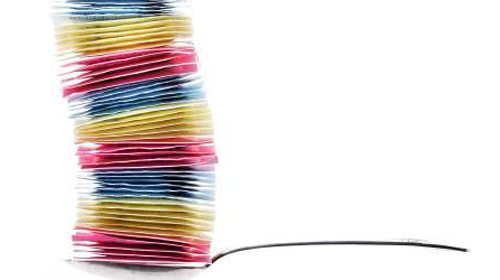
I never knew much about artificial sweeteners except that my grandmother used it because of her diabetes. I also knew that blue packets (Equal®) are better than pink packets (Sweet 'n Low®). According to my research (mostly Wikipedia), the first artificial sweetener was discovered by accident & it became popular with manufacturers because it was cheaper than actual sugar. To verify this claim, I went onto Amazon and looked up the prices of white sugar as well as 4 popular sugar substitutes. Here is the verdict -
Even though these calculations are not absolute; the differences in price is pretty clear. If the prices of artificial sweeteners can be up to 10x more than that of sugar, then why are they so popular? As a frequent user of artificial sweeteners, I wanted to know more about their pros & cons. I did more research (mostly Wikipedia again) & did these following comparisons -
Aspartame (Equal®)
First discovered in the early 1980s, aspartame is the common sweetener used in diet
soft drinks. It is 200x sweeter than sugar and it is made mainly of 2 amino acids.
Unfortunately, aspartame breaks down @ high temperatures so it can't be used for
cooking/baking. Health wise, aspartame has been involved in many controversies
in the past (i.e. aspartame metabolites were thought to be toxic/carcinogenic); but all
of the claims have been rebutted by the FDA.
Neotame
Used mostly in fruit/vegetable juices, neotame is 7,000x to 13,000x sweeter than
sugar. It is similar in properties to aspartame but more stable. Other than having a
bitter after taste, neotame is 1 of the only artificial sweeteners that is ranked as "safe"
by the Center for Science in the Public Interest
Saccharin (Sweet 'n Low®)
Discovered in 1957, saccharin was the first table top artificial sweetener & it is 300x
sweeter than sugar. In addition to having a bitter & metallic after taste, this sugar
substitute was linked to bladder cancer in rodents in the 1970s. However, all health
warnings have been removed since 2000.
Sucrolose (Splenda®)
Even though it was discovered in 1976, sucrolose wasn't really made popular until
recently. Unlike earlier sweeteners, sucrolose is made from sugar & has no artificial
flavor. Additionally, sucrolose can be heated up to 450 degrees which makes it
appropriate for cooking/baking. The 2 main negative attributes are that (1) it does not
produce browning/caramelization like sugar & (2) it has potential negative
environmental impacts.
Stevia (Truvia™)
Using only the leaf of the stevia plant, this natural sweeter that is 300x sweeter than
sugar. Like sucrolose, stevia can also be used for cooking/baking. Although Truvia™
and other stevia products have been popularized since 2008, not all stevia products
have been approved by the FDA.
After doing my research, it doesn't seem like artificial sweeteners are horrible for people's health. So go ahead & sweeten it up!
I never knew much about artificial sweeteners except that my grandmother used it because of her diabetes. I also knew that blue packets (Equal®) are better than pink packets (Sweet 'n Low®). According to my research (mostly Wikipedia), the first artificial sweetener was discovered by accident & it became popular with manufacturers because it was cheaper than actual sugar. To verify this claim, I went onto Amazon and looked up the prices of white sugar as well as 4 popular sugar substitutes. Here is the verdict -
- C&H® Pure Cane Sugar - $0.08 per oz
- Equal® Zero Calorie Sweetener - $0.33 per oz
- Sweet 'n Low® Zero Calorie Sweetener - $0.27 per oz
- Splenda® No Calorie Sweetener - $0.79 per oz
- Truvia™, Nature's Calorie-Free Sweetener - $0.07 per oz
Even though these calculations are not absolute; the differences in price is pretty clear. If the prices of artificial sweeteners can be up to 10x more than that of sugar, then why are they so popular? As a frequent user of artificial sweeteners, I wanted to know more about their pros & cons. I did more research (mostly Wikipedia again) & did these following comparisons -
Aspartame (Equal®)
First discovered in the early 1980s, aspartame is the common sweetener used in diet
soft drinks. It is 200x sweeter than sugar and it is made mainly of 2 amino acids.
Unfortunately, aspartame breaks down @ high temperatures so it can't be used for
cooking/baking. Health wise, aspartame has been involved in many controversies
in the past (i.e. aspartame metabolites were thought to be toxic/carcinogenic); but all
of the claims have been rebutted by the FDA.
Neotame
Used mostly in fruit/vegetable juices, neotame is 7,000x to 13,000x sweeter than
sugar. It is similar in properties to aspartame but more stable. Other than having a
bitter after taste, neotame is 1 of the only artificial sweeteners that is ranked as "safe"
by the Center for Science in the Public Interest
Saccharin (Sweet 'n Low®)
Discovered in 1957, saccharin was the first table top artificial sweetener & it is 300x
sweeter than sugar. In addition to having a bitter & metallic after taste, this sugar
substitute was linked to bladder cancer in rodents in the 1970s. However, all health
warnings have been removed since 2000.
Sucrolose (Splenda®)
Even though it was discovered in 1976, sucrolose wasn't really made popular until
recently. Unlike earlier sweeteners, sucrolose is made from sugar & has no artificial
flavor. Additionally, sucrolose can be heated up to 450 degrees which makes it
appropriate for cooking/baking. The 2 main negative attributes are that (1) it does not
produce browning/caramelization like sugar & (2) it has potential negative
environmental impacts.
Stevia (Truvia™)
Using only the leaf of the stevia plant, this natural sweeter that is 300x sweeter than
sugar. Like sucrolose, stevia can also be used for cooking/baking. Although Truvia™
and other stevia products have been popularized since 2008, not all stevia products
have been approved by the FDA.
After doing my research, it doesn't seem like artificial sweeteners are horrible for people's health. So go ahead & sweeten it up!
Subscribe to:
Comments (Atom)